Puzzle Game Dig Ball
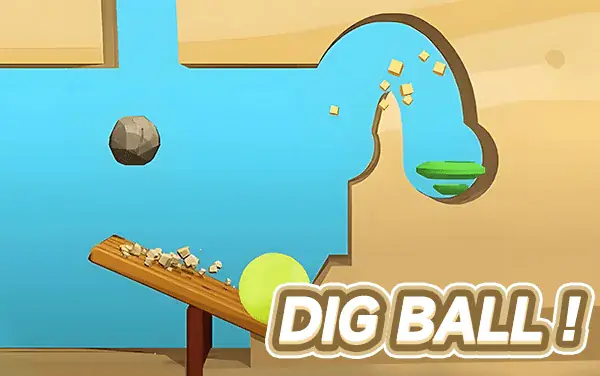
Carve a smooth path through sand and use gravity to guide the ball around obstacles and into its target.
Stamina
42%
Mental
72%
Reflex
18%
Luck
16%
Healing
68%
Social
5%
Game Guide & Walkthrough
Check your DNA Match for this game →
Every game has a unique gene. Want to know why this game attracts you? Click [DNA Insight] to find out.
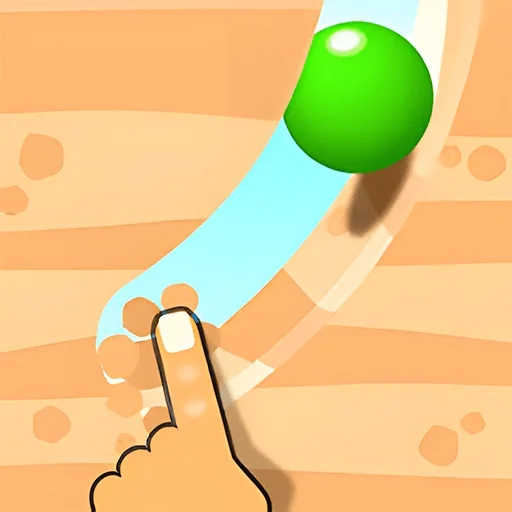
Dig Ball is a physics puzzle where digging reshapes terrain and gravity moves the colored ball. The player cannot drag the ball directly. Remove sand with a mouse or finger to create a channel toward a matching bowl, hole, or collection vehicle. Before digging, confirm the color destination and inspect obstacles, drops, and usable slopes between them. The shortest straight line is not automatically safe. A steep deep trench accelerates the ball and can produce a bounce that overshoots the target, while an overly flat route can consume momentum and stop halfway. A dependable method works backward from the target entrance. Define the angle and speed required for arrival, then connect that final section toward the starting ball. Leave a curved turn wider than the ball, with extra space along the outside, to accommodate drift at speed. Use a gentle slope before an obstacle to slow down, then a moderate drop afterward to restore motion instead of carving one narrow vertical pit. With several colored balls, inspect every matching target and design routes that do not compete for the same space. A ball released first may change a later collision or block a bowl entrance, so order also matters. Sand can still be removed ahead of a rolling ball, but emergency digging is rarely fast enough for a complex corner; prepare the main route before movement begins. When a ball stops, inspect for a local rise, flat shelf, or narrow pinch point. When it passes the target, widen and flatten the entrance buffer so friction and small impacts reduce speed. Change one slope or turn per retry, preserving a clear connection between terrain adjustment and physical result.
🕹️ Gameplay Logic
Once sand is removed, the ball moves according to gravity, slope, and collision. Every stroke changes the terrain, and the objective is a continuous channel that does not feed the ball into danger. You can refine the route while it rolls, but a bad drop is difficult to undo, so preparing the main path is more reliable than digging frantically ahead of the ball.
🎮 How to Play
- Hold and drag the mouse, or swipe with a finger, to remove sand.
- Inspect the ball, obstacles, and target before digging.
- Carve a continuous slope beneath the ball and control its steepness and width.
- Let gravity carry the ball around hazards and into the goal.
🏆 Pro Tips
- Shape the exit near the goal first, then work backward toward the ball for better alignment.
- Leave extra width on turns so a fast ball does not strike the outside wall.
- Use a gentle slope before an obstacle to reduce speed, then a steeper section afterward to regain momentum.
- Several small corrections are easier to control than one deep, narrow trench.
🧬 Game DNA Analysis
Mental 72: slope, route, and collision prediction are central.
Healing 68: carving sand and seeing a successful roll feel relaxing.
Stamina 42: retries require some persistence.
Common Questions (FAQ)
Similar Games
View All









🎮 You May Also Like
Curated premium games for your next session