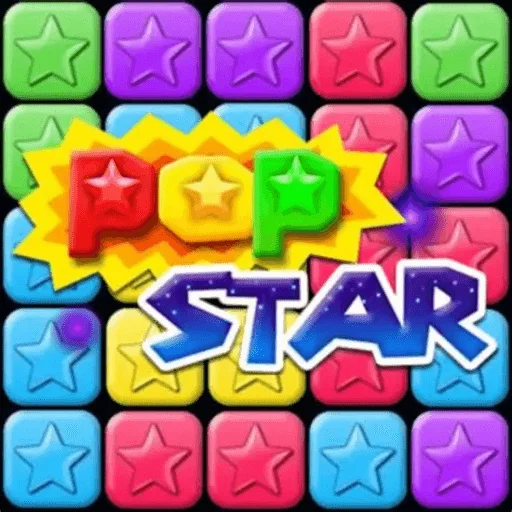
Match Game Pop Star
Tap connected stars of the same color, plan clusters, and clear the board.
Stamina
45%
Mental
70%
Reflex
22%
Luck
30%
Healing
78%
Social
10%
Game Guide & Walkthrough
Check your DNA Match for this game →
Every game has a unique gene. Want to know why this game attracts you? Click [DNA Insight] to find out.
Pop Star is built around groups of matching stars connected horizontally or vertically. Tapping a group of at least two removes it, unsupported pieces fall, and empty columns may pull separated areas together. A clear therefore does more than award its immediate points; it reconstructs the next board. At the opening, resist tapping the first pair. Read the colors along the bottom and identify several larger regions. If removing a middle color lets two matching regions meet, treat that as a two- or three-move construction rather than separate opportunities. One large cluster is generally worth more than the same stars divided into small clears, and consecutive eliminations can further improve the score. Stages use score targets, so removing every available group without planning does not guarantee progress. Through the middle, preserve colors that can grow after a drop and clear isolated groups with no useful future. Be careful with a small cluster acting as structural support: removing it may shift a planned match out of alignment. Near the end, the priority changes from building size to controlling leftovers. Inspect single stars at the bottom of each column and adjust heights with upper clears so the final columns retain at least one matching connection. Star bombs, wands, and refresh-style tools are most useful for a valuable dead corner or a score target that normal movement cannot rescue. Spending one while ordinary restructuring remains available wastes its ability to solve the true late-stage problem. After failure, compare the final score with the requirement. A large deficit usually means major clusters were broken too early; a narrow deficit with many leftovers points to end-board order.
🕹️ Gameplay Logic
Groups use horizontal and vertical adjacency; diagonal contact does not count. After a group disappears, stars above fall and empty columns draw the remaining areas together, creating new connections. Cluster size, consecutive clears, and final leftovers influence the score, and a cleared board must still meet the stage target. Limited tools can alter a local star or arrangement when normal order cannot.
🎮 How to Play
- Find two or more adjacent stars of one color.
- Read the drop pattern before removing them.
- Prefer moves that create a larger group.
- Near the end, avoid leaving isolated single stars.
🏆 Pro Tips
- Prioritize a clear that empties a column or joins two same-color regions because it changes the board most.
- Remove a small group only when it neither breaks a planned cluster nor supports an important alignment.
- In the endgame, work upward from isolated bottom stars; controlling column height matters more than one more flashy combo.
- Before using a tool, confirm that it directly improves the target score or removes an otherwise unmatched remainder.
🧬 Game DNA Analysis
Healing 78: chain clears feel relaxing.
Mental 70: move order and drops need planning.
Stamina 45: stages gradually add thought.
Common Questions (FAQ)



🎮 You May Also Like
Curated premium games for your next session