
Casual Game Flappy Bird
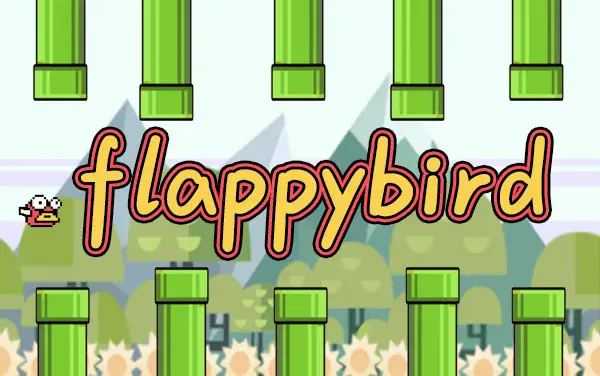
Tap to keep the bird airborne, pass each pipe gap, and extend the run.
Stamina
18%
Mental
22%
Reflex
88%
Luck
28%
Healing
32%
Social
10%
Game Guide & Walkthrough
Check your DNA Match for this game →
Every game has a unique gene. Want to know why this game attracts you? Click [DNA Insight] to find out.
Flappy Bird uses repeated taps for all flight control, yet asks the player to balance upward impulse against constant gravity. Each tap makes the bird flap upward, after which its motion gradually turns into a fall. Rapid repeated taps push it toward the top, while a long pause sends it quickly toward the ground. Only the opening between each upper and lower green pipe is safe. The score counts complete pipe groups passed, and contact with a pipe body, either edge, or the ground ends the run immediately. Do not aim at the entrance edge. Approach with the bird near the center of the opening and a slight downward tendency, preserving margin on both sides if timing is imperfect. For a high gap, build altitude while the pipe is still distant, then stop the rapid taps once the center line is reached. Trying to recover all height directly at the entrance commonly causes contact with the upper pipe. When the next gap is lower, skip a tap and let gravity lower the path naturally instead of making a deep fall followed by an emergency correction. Look toward the next opening in front of the bird while using peripheral vision for current height. This gives more time than staring only at the character. Horizontal pipe spacing is similar enough for one successful tap interval to become a baseline, but changing gap heights still require small adjustments. Review collision position precisely. Hitting the upper edge means too many taps or a late pause; hitting the lower edge means altitude was built too late; reaching the ground means attention stayed on the previous pipe for too long. Change only half a beat or one tap per retry, allowing a repeatable flight rhythm to develop.
🕹️ Gameplay Logic
Each tap gives the bird an upward impulse and gravity pulls it down between taps. Adjust altitude before the pipe arrives so the full body crosses the opening. Passing one pipe group adds score; touching a pipe or the ground fails immediately. Dense taps climb too high, long gaps fall too far, so both rhythm and the opening center define the path.
🎮 How to Play
- Tap once as the bird approaches the lower edge of a gap.
- Read the next gap immediately after passing a pipe.
- Keep taps short and even instead of mashing repeatedly.
- Restart after touching a pipe or the ground and adjust the rhythm.
🏆 Pro Tips
- Look toward the next pipe rather than tracking only the bird’s current position.
- Build upward motion early for a high gap and skip a tap when the next gap is low.
- Practice stability first; the score rises naturally as mistakes fall.
- Sound or animation can help mark a rhythm, but gap position remains the final cue.
🧬 Game DNA Analysis
Reaction 88: the gap window is brief and corrections must be timely.
Healing 32: the clear loop is satisfying but failure is frequent.
Luck 28: pipe heights vary within a readable pattern, leaving control to the player.
Common Questions (FAQ)








🎮 You May Also Like
Curated premium games for your next session