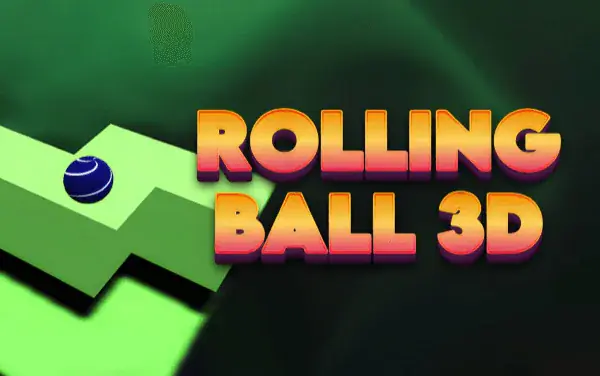
Adventure Game Roller Ball 3D
Roller Ball 3D is a suspended-course runner governed by momentum and directional control. Hold the mouse to advance and steer the ball, then release to reduce continued input. Slopes amplify speed, narrow bridges require early centering, and moving or fixed hazards need clearance for the ball's full width.
Stamina
47%
Mental
81%
Reflex
71%
Luck
30%
Healing
80%
Social
47%
Game Guide & Walkthrough
Check your DNA Match for this game →
Every game has a unique gene. Want to know why this game attracts you? Click [DNA Insight] to find out.
The ball rolls across a three-dimensional course. Mouse input changes forward and lateral direction, but accumulated momentum does not disappear instantly. A broad straight allows steady acceleration. Before a narrow bridge or corner, reduce input early and move toward the center. Waiting until the ball reaches the edge before correcting often lets sideways momentum carry it off the platform.
Slopes and drops need special handling. Downhill sections add speed naturally, and continuing to hold after landing can send the ball beyond the first safe adjustment point. Align with the middle of the landing before a jump because a large airborne correction cannot fully cancel the original direction. When passing an obstacle, account for the ball's radius rather than only its center; a glancing edge contact also changes the route.
Later levels chain ramps, narrow bridges, and several hazards. Divide a reliable route into acceleration, alignment, and crossing zones. Gain needed speed on the broad surface, finish centering before danger, and use only small changes while crossing. After a collision, avoid immediately steering fully in the opposite direction. Read the new motion first or one error can swing into another. Reaching the finish unlocks further challenges, and controlled momentum is more effective than maximum speed everywhere.
🕹️ Gameplay Logic
Holding the mouse continuously drives and guides the ball. Speed and direction are affected by momentum, slope, and collision. The ball must remain on valid track surface; falling fails the attempt or returns to a checkpoint. Avoiding hazards, crossing gaps, and reaching the finish completes the stage. Steering changes motion over time rather than teleporting position.
🎮 How to Play
- Hold the mouse to move forward and steer left or right to adjust the rolling direction.
- Build speed on broad sections, then center early before a narrow bridge or turn.
- Align with the landing center before a jump and stabilize after a downhill landing before accelerating again.
- Leave clearance for the ball's width, use small corrections through danger, and roll to the finish.
🏆 Pro Tips
- Complete centering on the broad approach; a large lateral change after entering a narrow bridge carries momentum toward its edge.
- A downhill section needs no constant acceleration. Use natural roll and preserve stopping distance after landing.
- After a glancing collision, release briefly to read the deflection, then make one modest opposite correction.
- Through chained turns, look toward the next exit instead of only at the ball and establish the correct entry angle early.
🧬 Game DNA Analysis
Mental 81: Slopes, momentum, and steering delay determine the landing line, so narrow bridges require advance braking and alignment.
Healing 80: Smoothly rolling over ramps, crossing platforms, and settling on the finish produces a fluid and satisfying physical rhythm.
Reaction 71: Moving hazards and exposed edges need timely corrections, although an abrupt turn can let momentum carry the ball off the track.
Common Questions (FAQ)






🎮 You May Also Like
Curated premium games for your next session